
Every year, thousands of homeowners sign off on gorgeous, 3D-rendered modular kitchen designs. They pick out sleek cabinet faces, gleaming hardware, and trendy materials, believing they’ve bought their dream kitchen.
Then, six months later, they end up on Reddit airing bitter regrets.
The truth is, kitchens don’t fail because of how they look. They fail because of how they work—specifically, the tiny infrastructure details that design catalogs gloss over. If you want a kitchen that survives heavy daily use without driving you insane, you need to look past the aesthetics.
Based on raw, uncensored experiences from real homeowners who have been through the remodeling trenches, here is a breakdown of what you actually need to watch out for.
The Circuit Paradox: Why More Outlets Won’t Save You
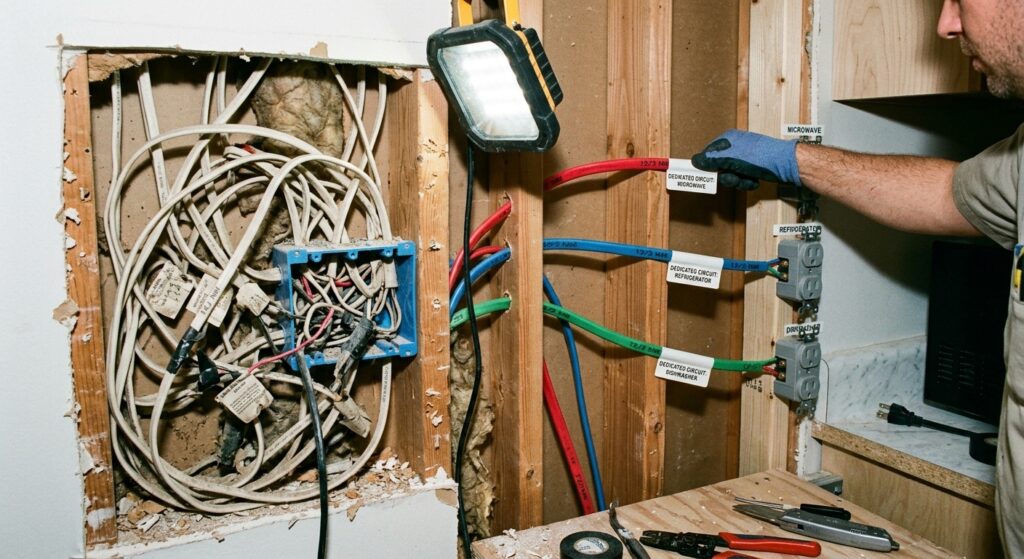
When planning a kitchen, the most common advice is “add more outlets”. But experienced homeowners will tell you that a high volume of plugs is useless if they all route back to the same weak breaker.
The Problem: Many builders save money by wiring an entire kitchen wall onto a single circuit. If you try to run your 1500W espresso machine, a 1200W microwave, and an Instant Pot at the same time, you’ll trip the breaker instantly.
The Non-Commodity Fix: Do not just ask for more outlets; demand more circuits. Heavy-hitting appliances like the microwave, refrigerator, and dishwasher should each sit on their own dedicated breakers.
Pro-Tip from the Threads: Consider a dual-circuit approach where you install duplex outlets, but wire the top plug to a different circuit than the bottom plug. Additionally, space your outlets every 2 feet. Why? Most small appliance cords are incredibly short (often only 2 feet long). If your outlets are spaced too far apart, you’ll constantly be dragging appliances across your counters just to reach a plug.
The Dimension Trap: Cabinet Depth vs. Appliance Protrusion
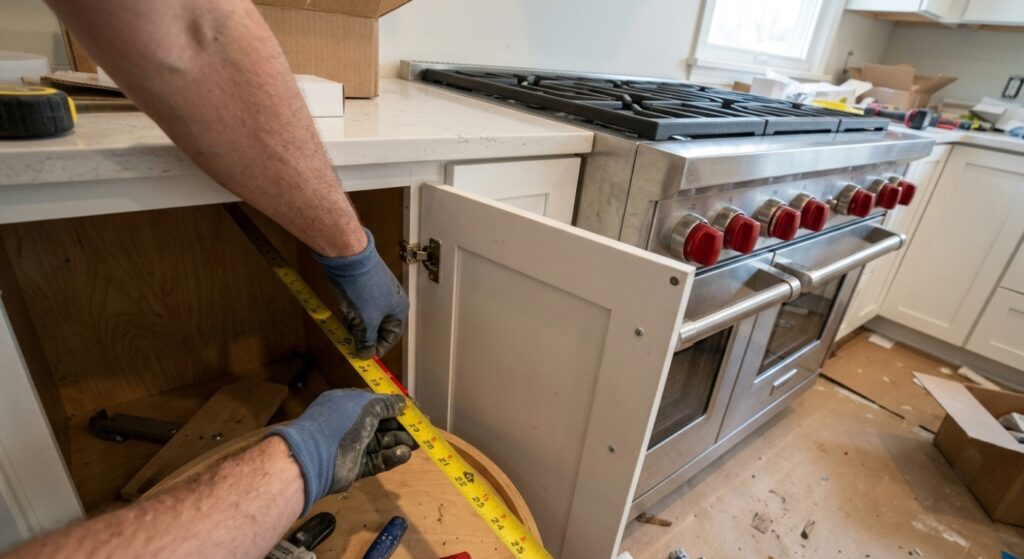
A modular kitchen relies on standard sizing. The moment you introduce custom, oversized, or heavy-duty appliances without micro-measuring, the system breaks.
- The Problem: Buying an impressive, commercial-grade 6-burner stove or a giant double-door fridge looks great in isolation. But if you don’t calculate your base cabinetry and counter depth perfectly, that stove will stick out 8 inches past your counters, looking completely mismatched. Even worse, adjacent features—like a lazy Susan corner cabinet—might be blocked from opening all the way.
- The Non-Commodity Fix: Map out every single appliance before ordering cabinetry. If you are removing walls or an island, double-check your floor layout so you don’t accidentally delete existing electrical pathways you’ll need later.
Aesthetic Traps: Materials That Don’t Care About Your Real Life
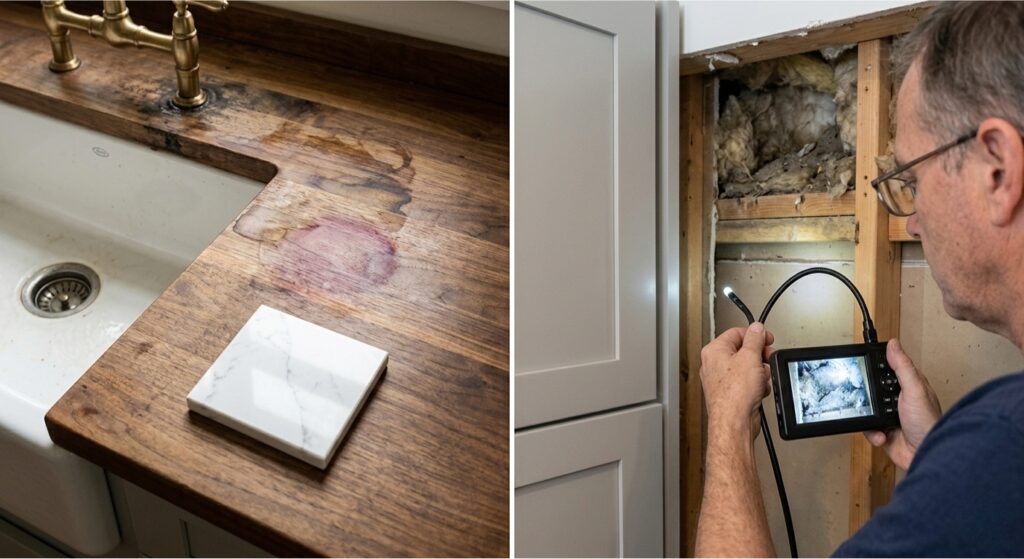
Design blogs love “warm, organic” materials like open wooden shelves, rough flooring, and butcher block countertops. Real-world users call them a recipe for disaster.
The Butcher Block Regret
Wood countertops look stunning on Instagram. But in a heavily used kitchen, wood near a water source is incredibly high-maintenance.
“I regret butcher block countertops, even with extreme care and maintenance it still gets stains. We used to rent a place with it near the sink. Recipe for mould and disaster.” — Reddit User
- The Alternative: If you cook heavily, opt for Quartz. It provides a low-maintenance, highly durable surface that mimics the beauty of marble or stone without the porous liability.
The Splatter Test & Rough Surfaces
Before choosing a trendy wall or floor material, run a practical test. Take a sample piece of the material home, tack it to your wall, and cook something that splatters grease everywhere. If it’s impossible to wipe clean, do not buy it. Avoid rough-sawn wood flooring in the kitchen as well; the texture feels great underfoot but acts as a trap for dirt and spilled food. Similarly, skip the open shelving unless you enjoy cleaning a permanent layer of grease-bound dust off your dishes.
How to Audit Your Contractor Like a Forensic Inspector
The number one complaint from homeowners isn’t necessarily the design—it’s poor workmanship and unfinished details. Contractors frequently promise premium materials and flawless execution, only to rush the job and leave the last 5% of the work looking sloppy and incomplete.
To protect your investment, you must treat the installation like a formal quality audit:
- Get Everything in Writing: Do not rely on verbal agreements. Request granular material specifications, document every payment milestone, and keep an active photo log of the hidden framing and wiring before the drywall or backing panels go up.
- Use a Borescope for Hidden Gaps: Contractors love to hide sloppy framing, empty voids, or uninsulated soffits behind trim work and cabinet backings. Buy a cheap, $20 endoscope/bore scope camera online and thread it into cabinet voids and soffits to inspect hidden spaces before signing off on final payments.
- Hold Back the Last Payment: Never pay a contractor 100% of the funds if the details are rushed. Invest heavily in the things that are a nightmare to replace later—like a high-quality, durable sink—and ensure the final fit-and-finish meets your standard before releasing the final check.
The Silver Lining: Modular Done Right
Despite the horror stories, modular systems (including flat-pack or RTA options like IKEA) can provide incredible long-term value. The difference between a kitchen you love for 15 years and one you regret within weeks doesn’t depend on the brand name. It depends entirely on whether you took the time to meticulously plan the hidden infrastructure, verify your contractor’s references, and choose materials that match how you actually live.